On Archive Fever
Or, the joys of finding things out
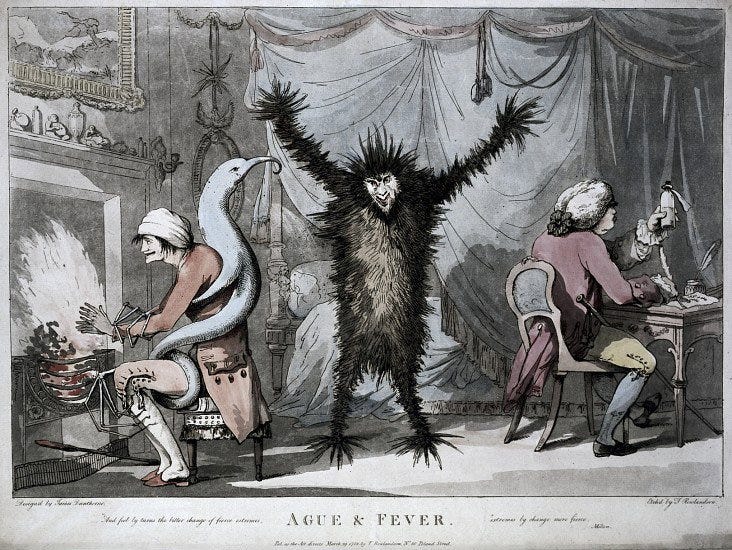
Two, related things to share. The first is a podcast I was on last year, called Archive Fever, discussing my unaward winning – and now widely unavailable – Frank Moorhouse biography. And the second is a review-essay I recently had published in the Los Angeles Review of Books, about the new translation of Albert Camus’ notebooks.
The connection?
1.
Archive Fever describes itself as ‘a peak nerd podcast featuring intimate conversations with writers, artists, curators, fellow historians and other victims of the research bug.’ Co-hosted by Professor Clare Wright and Dr Yves Rees – the Roy and HG of history podcasts1 – each episode is a deep dive into the background of researching and writing a particular project, exploring the archive in all its variations, but also the ethics accompanying its use.
You can listen to my episode by clicking on the Archive Fever logo:

2.
On Archive Fever, they have a standard opening question, which is when did you first become bitten by the archive bug?
My answer was that it occurred sometime in the mid-1990s in a second-hand bookshop in Brisbane, Queensland, Australia. The shop is appropriately called Archives Fine Books.
At that stage, I had read some Albert Camus, and I had read about him, and if asked at the time, I would have repeated much of the conventional view – that he was an Existentialist, a philosopher of the absurd, that his novels were an illustration of that philosophy, and so on. To be honest, I found his work mildly interesting, but ultimately boring. And I had already moved on.
But then in Archives Fine Books that day I found a copy of Camus’ Notebooks 1935-1942, translated by Philip Thody. I had, at that stage, never read an author’s notebooks or journals, let alone any correspondence that may have been posthumously released. Although published, this book was an example of what sits in archives, and what usually remains hidden from public view.
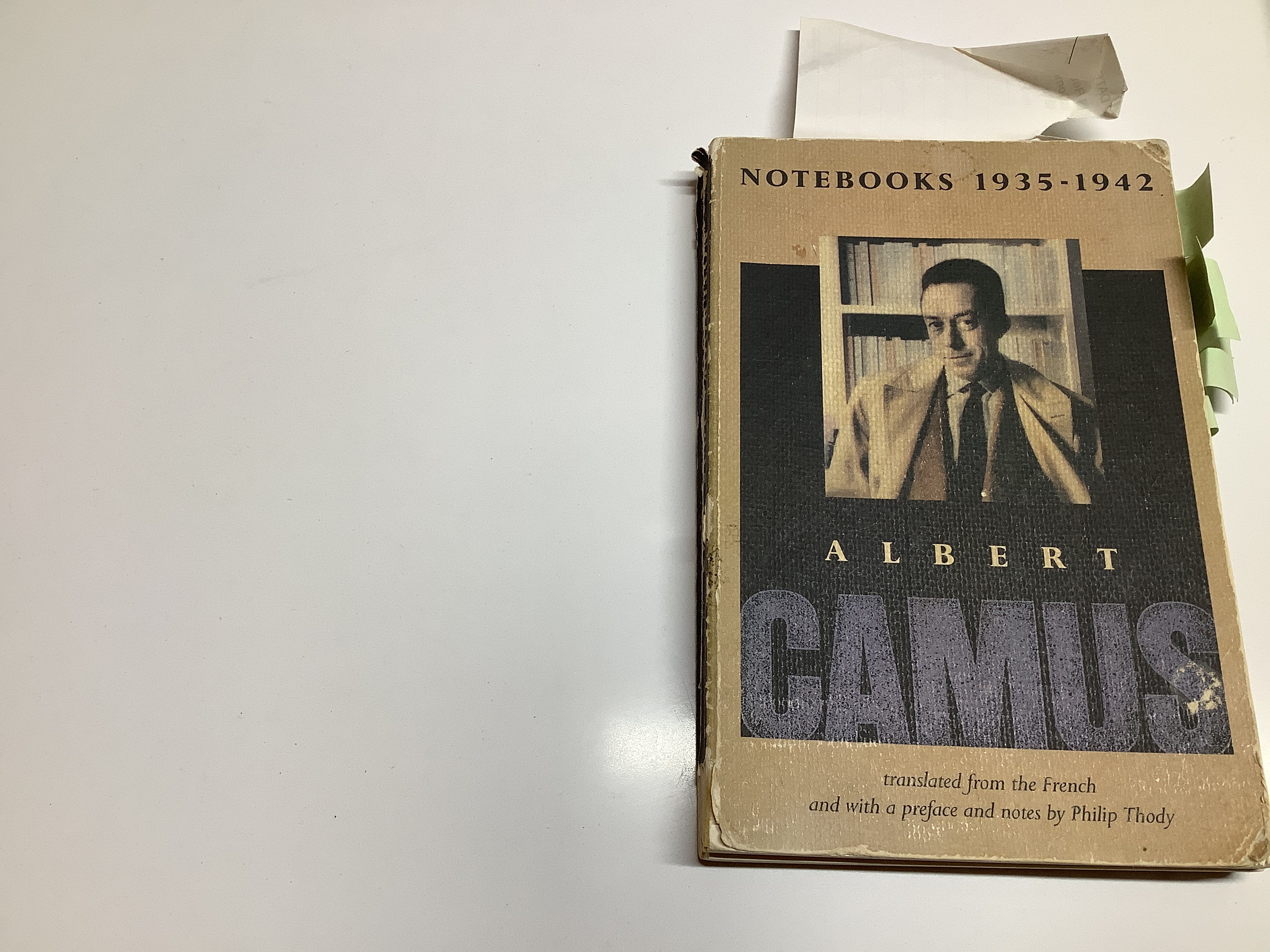
In fact, this material – Camus’ notebooks, and later his correspondence, and some manuscripts unpublished in his lifetime – came out of Camus’ own archives.
But why the archive bug bit me was because, standing there in the bookshop that day, what I reading in Camus’ notebooks, even cursorily, did not tally with the conventional view of his life and work that I had been taught. I still remember the feeling of misrecognition I felt, flipping through this notebook.
It was not only different, but it was more interesting to me. So, I bought the book, and read it, then I tracked down Camus’ other notebooks, and I started re-reading the books he had published in his own lifetime. And then I read everything else of his I could find, most of which had been published (and translated) posthumously. The picture that started forming belied the conventional view that had grown around him, and had weighed him down, obfuscating his from public view.
The broader experience – and this is was the point I tried making in responding to the opening question on Archive Fever – was that archives became a way for me to test, and often question, the conventional views of various authors and thinkers – such as Frank Moorhouse – that I have become interested in over the years. And it has also humbled my own thinking, even as it became more sharply critical of individuals who seem otherwise content within the parameters of certain intellectual conventions.
Every reading or interpretation of a work – or a body of work – is only provisional, and there is always the possibility of some new material – a letter, a note, a manuscript – that may alter that reading or interpretation. For me, chasing that feeling is the embodiment of archive fever.
3.
Coincidentally, soon after recording that podcast, but before it had been released, I learned that the University of Chicago Press was planning on publishing The Complete Notebooks by Albert Camus (translated by Ryan Bloom), which includes three volumes of notebooks, Camus’ earliest set of reading notes, and his South American travel journal. And soon after that I was commissioned to review that book for the Los Angeles Review of Books.
You can read the review by clicking on the cover image of The Complete Notebooks below:

4.
The earliest edition of Camus’ notebooks, that I bought that day in Archives Fine Books, is now broken into two parts, on the page that contains what I would argue is the fundamental insight that Camus had, early on in his thinking, which informs everything he wrote thereafter.
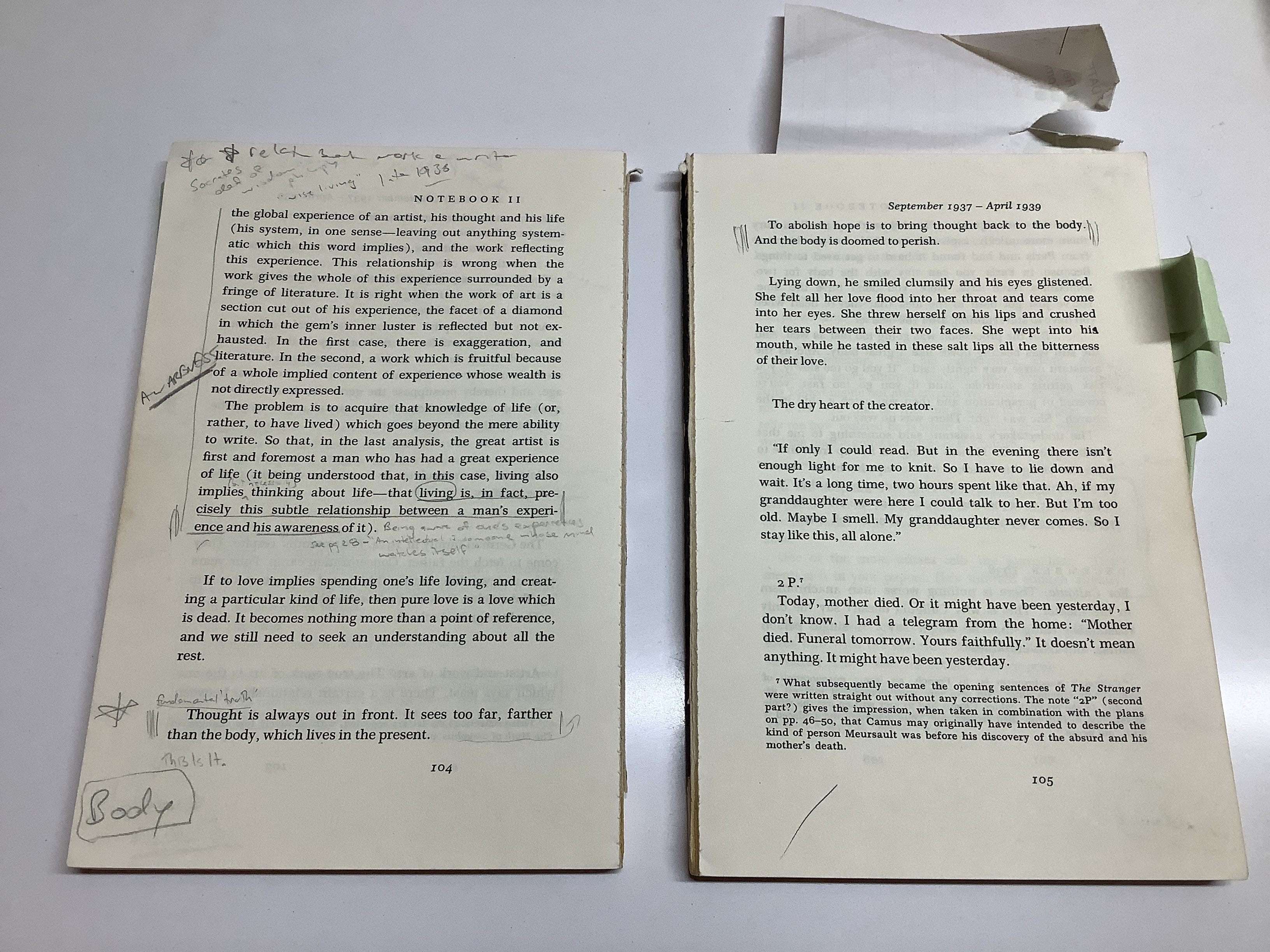
In the Philip Thody translation, this reads:
Thought is always out in front. It sees too far, father than the body, which lives in the present.
To abolish hope is to bring thought back to the body. And the body is doomed to perish.
The Ryan Bloom translation reads:
Thought is always ahead of things. It sees too far, further than the body, which is in the present.
To take away hope is to bring thought back to the body—and the body must rot.
I’ve been meditating on that for the past thirty years. It’s the key that unlocks Camus’ thought.
You’re welcome.
5.
But this publication also confirmed much of what I had said on Archive Fever. The fresh and consistent translation opened up new nuances of meaning, and Ryan Bloom’s editorial annotations clarified many of the entries. And, just as I had said on the podcast, there always being the possibility of new material: The Complete Notebooks includes a previously untranslated journal that Camus kept when he was living in Oran, Algeria, from 1938 to 1942, while writing The Stranger and The Myth of Sisyphus. The Oran Notebook – only discovered in 1988 – offers a new perspective on those early works.
I was erecting barriers between which I was narrowing the possibilities of my life, and, in taking man’s freedom seriously, I can now see that I was doing the same thing that so many bureaucrats of the mind and heart do, those people who inspire in me nothing but disgust.
That sort of intellectual is something I ceased to be that night.
6.
Speaking of archives, I also recently wrote an article for the National Library of Australia. In 2025 I did a talk there on Frank Moorhouse’s Juvenilia.

But in this new article, I was able to show some images from Frank’s archives, of the actual material that I used in writing both that talk and the first volume of his biography - including the story Frank wrote as a 15 year old, correcting Shakespeare, and the letter he wrote to himself as a 16 year old before he sat his final exams, when his aim was to become a writer.
You can read that article (and look at the archival images) by clicking on the National Library of Australia logo below:

A reference that only Australians will understand
If you appreciate reading this newsletter, and you want it to continue, and you would like to support independent scholarship and criticism, then please consider doing one of two things, or both: consider signing up to this newsletter for free (or updating to a paid subscription) (preferably the latter as it will allow me to write this newsletter more frequently, and pay for whiskey and books).
And please share this newsletter far and wide, to attract more readers, and possibly more paying subscribers, to ensure that it continues.